A Kenya 4×4 rental can be the spine of a self-drive safari, or simply the right vehicle for a rough road with a driver already behind the wheel. The two products look similar in a photograph and are quite different to book. Self-drive suits travellers who are confident on gravel, happy to navigate park rules, and ready for the insurance paperwork. A 4×4 with a driver, especially a pop-up-roof safari vehicle, is the usual choice for a first visit and for any itinerary that includes long park days. This guide sets out how the hire works in 2026, what it typically costs in US dollars, and where driving yourself is actually allowed.
The companion piece is the self-drive safari guide, which is about park rules rather than the rental contract. Read both before you assume that a licence at home is enough at a reserve gate. For a driven safari, the private driver page covers the day-to-day arrangement in more detail.
Self-Drive or a Vehicle with a Driver
Self-drive makes sense if you have driven 4x4s on unpaved roads before, want the freedom to linger, and have the time to manage fuel, gates and evening arrivals yourselves. It can also be the cheaper option per day for a couple or a family who would otherwise pay a driver rate on top of the vehicle. It makes less sense if this is your first African safari, if you will be in the Mara during a busy migration month, or if you do not want one person in the car to be working all day.
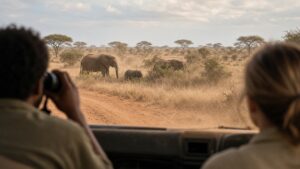
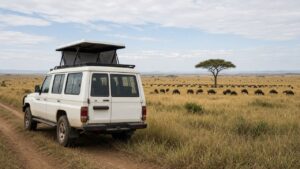
A 4×4 rental with a driver, or a 4×4 private driver, is the standard safari product: a Land Cruiser or similar, often with a pop-up roof, and someone who knows the gates, the current loops, and how to deal with a puncture forty kilometres from a workshop. You pay more per day, and you see more, with less fatigue. City and coast days do not always need that vehicle; a simpler car is enough in Nairobi or along much of the Diani road, unless you will continue into park tracks the same afternoon.
Freedom and a lower daily rate, in exchange for navigation, insurance excess and doing the driving after a long game day.
The usual first-safari choice. You watch; the driver handles roads, gates and the afternoon thunderstorm.
Often the cleanest model: scheduled flights to the bush, and game drives in the camp’s own 4×4, with no hire desk at all.
Vehicles, Insurance and Typical Prices
For parks, the vehicle you actually want is a genuine safari 4×4, preferably with a pop-up or hatch roof, high clearance, and seat belts that work. A soft-roader or a two-wheel-drive crossover with “4×4” in the brochure is not enough for wet black-cotton soil or a rutted reserve track. Rooftop-tent models exist for camping itineraries and are a different style of trip, with more setup time and more limits on where you may overnight. A 4×4 rental in Nairobi is the usual pickup point at the start of a circuit; coastal and park-side hires exist, but one-way fees can surprise you if you have not asked.
Typical self-drive rates in 2026 for a capable safari 4×4 often sit in a broad range of about USD 80 to 200 per day, sometimes more for a newer pop-up-roof Cruiser, a peak month, or a fully kitted camping vehicle. Insurance, a security deposit or a hold on a credit card, mileage caps, and additional-driver fees sit on top. The collision excess can be large; a daily reduction or a waiver, if offered, is worth reading in plain language, including what is still excluded (glass, tyres, underbody, water damage, off-road in some contracts). A cheap headline rate with a painful excess is not cheap if something goes wrong on a remote track.
| Arrangement | Typical 2026 range | Usually watch for |
|---|---|---|
| Self-drive safari 4×4 | USD 80–200 per day | Excess, mileage, second driver, one-way fees, fuel policy |
| Pop-up roof 4×4 with driver-guide | USD 200–350 per vehicle per day | Whether fuel, driver lodging and park vehicle fees are included |
| Deposit or card hold | Often several hundred to a few thousand dollars | Must be a credit card in the main driver’s name in many contracts |
Fuel is almost always extra on a self-drive, and a long Tsavo or northern circuit will use more than a city week. Return the vehicle with the agreed tank level, and photograph the existing marks at pickup. Cross-border use, if you hoped to continue into Tanzania, is a separate permission and often a no; do not assume it. For a driven vehicle, ask the same cleanliness questions you would of any safari quote: fuel, driver accommodation, overtime, and park fees for the car. The safari cost guide shows how the vehicle sits in the wider budget.
- Get the inclusions in writing before you fly, especially insurance excess and one-way fees.
- If you want a driven pop-up roof from day one, start with a 4×4 private driver quote rather than a bare self-drive rate.
- A planned multi-day tour can attach the right vehicle to the route, so you are not changing cars at every park.
Where You Can Drive, and How to Stay Out of Trouble
Self-drive is permitted in a number of Kenya Wildlife Service parks, with rules about speed, leaving the road, and opening hours. It is more restricted, or impractical, in some reserves and conservancies, and walking or night driving is not something you invent because you have hired a car. The self-drive guide is the place for those limits. In the Mara, conservancy access is typically tied to a stay, not to a rental agreement. In busy parks, a pop-up roof and a slow, courteous style matter as much as ground clearance.
Drive in daylight, especially on unfamiliar gravel. Arrive at camp before dusk if you can. Carry water, a charged phone, a paper idea of the next gate, and the operator’s breakdown number. After rain, black-cotton soil can stop even a good 4×4; a detour or a night in town is better than a recovered vehicle and a ruined axle. Speed bumps, livestock and matatus on the tarmac require the same attention as ruts in the park. Off-road clauses in the insurance are the ones people discover too late, usually after a well-meant attempt to get closer to an animal or to follow a muddy shortcut.
Documents should travel in a single folder: licences, any required international permit if your operator asked for one, the hire contract, and copies of passports. The person who signed is often the only one insured to drive unless a second driver was added. A Nairobi airport transfer on arrival, then a morning pickup of the 4×4 after a night’s sleep, is safer than collecting a safari vehicle at the end of a night flight.
Practical Tips and Common Mistakes
- Choose a real safari 4×4 with clearance, not a city SUV that looks rugged in a car park
- Read the excess and the exclusions, not only the daily rate
- Check which parks and conservancies allow self-drive before you lock the route
- Photograph the vehicle at pickup and return, including tyres, windows and the underbody if you can
- Plan daylight arrivals, and do not treat a six-hour transfer as a short hop
- If in doubt on a first safari, hire the driver too; you can still self-drive another year
The usual mistake is to hire the cheapest 4×4 and discover, at the first wet park road, that it is the wrong tool. The second is to skip the insurance small print and then argue about an excess at a dusty desk. The third is to build a route through areas where self-drive is unwelcome or unwise, and to lose a day renegotiating. A well-chosen Kenya 4×4 rental is a pleasure, whether you drive it or sit in the back with the roof up. Match the vehicle to the parks, the contract to your risk, and the driver question to your experience, and the rest of the safari can stay about the land rather than about the car. If you would rather not think about hire desks at all, start with a tour quote and let the vehicle come with the itinerary.
Frequently Asked Questions
Can I self-drive a 4×4 on safari in Kenya?
Yes, in a number of parks, if you hire a suitable vehicle and follow the rules. Some reserves and conservancies have tighter access. Read the self-drive guide and the hire contract before you plan the route.
How much does a Kenya 4×4 rental cost?
Self-drive safari 4x4s often range from about USD 80 to 200 per day, plus fuel, insurance details and possible one-way fees. A pop-up roof vehicle with a driver-guide is commonly about USD 200 to 350 per vehicle per day, with inclusions confirmed in the quote.
Do I need a pop-up roof?
It is the right tool for long game drives, because everyone can stand and look around. It is unnecessary for a Nairobi or beach-only week. If parks are the point of the hire, say yes.
Is insurance included?
Some cover is usually included, but the excess can be high and some kinds of damage can be excluded. Ask for the excess, the exclusions, and the cost of any reduction, in writing.
Should I hire a driver as well?
For a first safari, or a busy, long circuit, yes in most cases. Self-drive is a better match if you already like this kind of driving and have the time to do it well.
Can I take a rental 4×4 into Tanzania?
Often not, or only with special paperwork and fees. Do not assume cross-border use is allowed. If a Mara–Serengeti plan is the point, ask before you book the car.
Get Your Free Custom Kenya Travel Quote Today!
Tell us whether you want to self-drive or travel with a driver-guide, which parks you have in mind, and we will quote a suitable 4×4 with the insurance and inclusions written clearly.
Browse Multi-Day Tours Explore Short Excursions