Slow down in Kenya and you start to notice the layers of its history: a Portuguese fortress guarding Mombasa’s harbour, the coral-stone lanes of Lamu where donkeys still carry the loads, ruined Swahili palaces in a coastal forest, sacred groves kept by village elders, and dry-stone walls near Lake Victoria that are centuries old. Kenya has eight UNESCO World Heritage Sites, five cultural and three natural, from the glaciers of Mount Kenya to the jade waters of Lake Turkana.
Free Consultation: Tell our local team which UNESCO sites you would like to see and get a free, no-obligation trip plan.
The travel experts from KenyaAssist arrange drivers, guides, park entries, transfers and lodges for every site on this list. Below you will find the complete list as it stands on the official UNESCO World Heritage List, with the year each site was inscribed, its type, and practical visit information: where it is, how to get there, the best season and how much time to plan. A summary table, the sites on Kenya’s Tentative List and answers to common questions follow.
How we counted: this list follows the official UNESCO page for Kenya (whc.unesco.org). It includes the newest Kenyan site, the Historic Town and Archaeological Site of Gedi, inscribed in 2024.
🗺️ UNESCO World Heritage Sites in Kenya
- Lake Turkana National Parks, natural, 1997
- Mount Kenya National Park/Natural Forest, natural, 1997
- Lamu Old Town, cultural, 2001
- Sacred Mijikenda Kaya Forests, cultural, 2008
- Fort Jesus, Mombasa, cultural, 2011
- Kenya Lake System in the Great Rift Valley, natural, 2011
- Thimlich Ohinga Archaeological Site, cultural, 2018
- Historic Town and Archaeological Site of Gedi, cultural, 2024
Four cultural sites between Lamu and the south coast, easy to link on one coastal trip.
Glaciers, forest and conservancies around Mount Kenya, flamingos and rhinos at Bogoria, Nakuru and Elementaita.
A desert lake rich in fossils in the far north and stone enclosures near Lake Victoria.
The 8 UNESCO World Heritage Sites of Kenya
🐊 Lake Turkana National Parks
Lake Turkana is the most saline of Africa’s large lakes, a long green lake in a landscape of lava and desert. The site combines three parks: Sibiloi National Park on the eastern shore, with the Koobi Fora fossil deposits that have shaped our understanding of human evolution, and the volcanic Central Island and South Island, breeding grounds for Nile crocodiles. The site has been on the List of World Heritage in Danger since 2018, mainly because of the effects of upstream dam and irrigation projects on the lake.
Type: Natural
Inscribed: 1997, extended 2001 (on the Danger List since 2018)
Where: Turkana and Marsabit counties, far northern Kenya
Getting there: An expedition by 4×4 from Nairobi over several days, via Marsabit to the east shore or via Lodwar to the west shore, or by charter flight to local airstrips.
Best season: It is hot all year. The drier months from about June to September and December to February make the tracks easier.
Time needed: 5 to 7 days for a road trip, fewer with flights.
Official page: whc.unesco.org
Map: Show on Google Maps
🏔️ Mount Kenya National Park/Natural Forest
At 5,199 metres, Mount Kenya is the second-highest mountain in Africa, an ancient extinct volcano with rugged peaks, receding glaciers, tarns and giant lobelias and groundsels in its afro-alpine zone. Since 2013 the site also includes the Lewa Wildlife Conservancy and the Ngare Ndare Forest Reserve in the foothills, an important elephant corridor and rhino refuge. Our Mount Kenya travel guide explains the trekking routes and day hikes, and our Lewa Conservancy guide covers the rhinos and walking safaris.
Type: Natural
Inscribed: 1997, extended 2013
Where: Central Kenya, near Nanyuki, Naro Moru and Chogoria
Getting there: By road from Nairobi to Nanyuki, a drive of a few hours, or by a short flight to Nanyuki. The Sirimon, Naro Moru and Chogoria routes start from the towns around the mountain.
Best season: The drier months, roughly January to February and July to October.
Time needed: 4 to 5 days for a trek to Point Lenana, 1 to 2 days for day hikes or a visit to Lewa.
Official page: whc.unesco.org
Map: Show on Google Maps
⛵ Lamu Old Town
Lamu is the oldest and best-preserved Swahili settlement in East Africa, still lived in as it has been for centuries. There are no cars in the old town: you explore narrow lanes of coral-stone houses with carved wooden doors, the seafront, mosques and the Lamu Fort on foot, and travel between the islands by dhow. Lamu is also an important centre of Islamic and Swahili culture with festivals that draw visitors from the whole coast.
Type: Cultural
Inscribed: 2001
Where: Lamu Island, northern Kenyan coast
Getting there: Fly to Manda airport, then take a short boat ride to Lamu town. Our Lamu Old Town walking excursion is a good start with a local guide.
Best season: Most of the year. The long rains from about April to June are the wettest period.
Time needed: 2 to 3 days.
Official page: whc.unesco.org
Map: Show on Google Maps
🌳 Sacred Mijikenda Kaya Forests
Along some 200 kilometres of the coast, separate patches of forest hide the remains of the fortified villages (kayas) of the Mijikenda people. The villages were founded from the 16th century and abandoned by the 1940s, but the forests are still revered as the homes of the ancestors and are protected by councils of elders. Visiting is a quiet experience led by community guides, who explain the rules that apply inside the sacred forest.
Type: Cultural
Inscribed: 2008
Where: Kwale, Mombasa and Kilifi counties on the Kenyan coast
Getting there: By car from Mombasa, Diani or Kilifi. Kaya Kinondo near Diani is one of the kayas that receives visitors.
Best season: All year, with the driest months from about December to March and July to October.
Time needed: Half a day.
Official page: whc.unesco.org
Map: Show on Google Maps
🏰 Fort Jesus, Mombasa
Built by the Portuguese between 1593 and 1596 to guard the harbour of Mombasa, Fort Jesus is one of the best examples of 16th-century Portuguese military architecture. It changed hands many times between the Portuguese, Omani Arabs and the British, and today houses a museum. It sits at the edge of Mombasa Old Town, so most visitors combine the two on our Fort Jesus and Old Town Mombasa excursion.
Type: Cultural
Inscribed: 2011
Where: Mombasa Island, Mombasa County
Getting there: In central Mombasa, a short drive from the city’s hotels and from Moi International Airport, and reachable from Diani or Nyali by car.
Best season: All year.
Time needed: 2 to 3 hours, half a day with the Old Town.
Official page: whc.unesco.org
Map: Show on Google Maps
- Check out our tailored Kenya tours, which we adapt to the parks and heritage sites you want to see.
🦩 Kenya Lake System in the Great Rift Valley
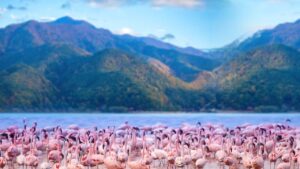
Three shallow, alkaline lakes on the floor of the Rift Valley make up this site: Lake Bogoria, Lake Nakuru and Lake Elementaita. They are among the world’s most important feeding grounds for lesser flamingos and support many other water birds. Lake Nakuru National Park adds rhinos, Rothschild’s giraffes and lions, while Lake Bogoria is known for its hot springs and geysers. See our Lake Nakuru travel guide for planning tips.
Type: Natural
Inscribed: 2011
Where: Nakuru and Baringo counties, central Rift Valley
Getting there: By road from Nairobi. Elementaita and Nakuru lie close to the main highway west of Naivasha, and Bogoria is further north via Marigat.
Best season: All year. Flamingo numbers vary with water levels, so ask us for the current situation before you go.
Time needed: 1 to 2 days.
Official page: whc.unesco.org
Map: Show on Google Maps
🪨 Thimlich Ohinga Archaeological Site
On a hill near Lake Victoria stand dry-stone enclosures built without mortar, probably from the 16th century. Thimlich Ohinga is the largest and best preserved of these traditional settlements (ohinga) in the Lake Victoria basin. The walls protected communities and their livestock, and the site shows how pastoral communities organised their life in the region.
Type: Cultural
Inscribed: 2018
Where: Migori County, south-western Kenya, near the town of Migori
Getting there: Fly to Kisumu and continue by road, or drive from Kisumu or the Maasai Mara region.
Best season: The drier months, roughly June to September and December to February.
Time needed: Half a day at the site, plus the drive.
Official page: whc.unesco.org
Map: Show on Google Maps
🕌 Historic Town and Archaeological Site of Gedi
Hidden in coastal forest a short way inland, the abandoned town of Gedi was one of the most important Swahili towns of the coast from the 10th to the 17th century, part of a trading network that reached Persia and beyond. Inside its walls you walk past the remains of mosques, houses, a palace and a clever water system built of coral stone. Kenya’s newest World Heritage Site was inscribed in 2024.
Type: Cultural
Inscribed: 2024
Where: Near Watamu, Kilifi County, south of Malindi
Getting there: By car from Watamu or Malindi, a short drive, or as a day trip from Mombasa or Kilifi.
Best season: All year, with the driest months from about December to March.
Time needed: 2 to 3 hours, easy to combine with Mida Creek or the Arabuko Sokoke Forest.
Official page: whc.unesco.org
Map: Show on Google Maps
UNESCO World Heritage Sites in Kenya at a Glance
| # | World Heritage Site | Type | Inscribed | Where | Time needed |
|---|---|---|---|---|---|
| 1 | Lake Turkana National Parks | Natural | 1997 | Far north | 5–7 days by road |
| 2 | Mount Kenya National Park/Natural Forest | Natural | 1997 | Central Kenya | 1–5 days |
| 3 | Lamu Old Town | Cultural | 2001 | North coast | 2–3 days |
| 4 | Sacred Mijikenda Kaya Forests | Cultural | 2008 | Coast | Half a day |
| 5 | Fort Jesus, Mombasa | Cultural | 2011 | Mombasa | Half a day |
| 6 | Kenya Lake System (Bogoria, Nakuru, Elementaita) | Natural | 2011 | Rift Valley | 1–2 days |
| 7 | Thimlich Ohinga Archaeological Site | Cultural | 2018 | Migori, Lake Victoria region | Half a day plus travel |
| 8 | Historic Town and Archaeological Site of Gedi | Cultural | 2024 | Watamu, Kilifi | 2–3 hours |
Kenya’s Tentative List
Countries put candidate sites on a Tentative List before nominating them. Kenya added many sites in 2023. These are on the list but are not World Heritage Sites yet:
- Maasai Mara Game Reserve and Amboseli National Park (2023): Kenya’s two best-known safari areas.
- Hell’s Gate National Park, Kakamega Forest and the Mt. Elgon Ecosystem (2023).
- Coastal Forests of Kenya (Arabuko Sokoke Forest and Shimba Hills) and the Kilifi Caves (2023).
- Olorgesailie Prehistoric Site, the Stone Pillar Sites of the Turkana Basin, the Mfangano Island Rock Art Sites and the Marakwet Escarpment Furrow Irrigation System (2023).
- Also listed: the Meru Conservation Area, the Nyandarua (Aberdare) Mountains, Mt. Marsabit, Mt. Kulal, the Eastern Arc Mountains of Kenya, the Tana Delta and Forests Complex, and Geometric rock art in the Lake Victoria Region (a joint candidate with Tanzania and Uganda).
You can see the full list on the UNESCO page for Kenya.
Frequently Asked Questions
How many UNESCO World Heritage Sites does Kenya have?
Kenya has eight World Heritage Sites: Lake Turkana National Parks, Mount Kenya, Lamu Old Town, the Sacred Mijikenda Kaya Forests, Fort Jesus, the Kenya Lake System, Thimlich Ohinga and Gedi.
What is the newest UNESCO site in Kenya?
The Historic Town and Archaeological Site of Gedi near Watamu, inscribed in 2024.
Is the Maasai Mara a UNESCO World Heritage Site?
Not yet. The Maasai Mara Game Reserve is on Kenya’s Tentative List, which means it may be nominated in the future.
Which Kenyan UNESCO sites can I see on the coast?
Fort Jesus in Mombasa, the Kaya forests between Kwale and Kilifi, Gedi near Watamu and Lamu Old Town. A week on the coast can cover all four.
Which Kenyan UNESCO site is in danger?
Lake Turkana National Parks has been on the List of World Heritage in Danger since 2018.
When is the best time to visit Kenya’s UNESCO sites?
The drier months from about July to October and from December to February suit most sites. The long rains from about April to June make some roads and treks harder.
Plan Your Kenya UNESCO Trip with KenyaAssist
Drivers, guides, park entries and lodges arranged by our local team, with fair prices and help every step of the way.
Browse Multi-Day Tours Explore Short Excursions