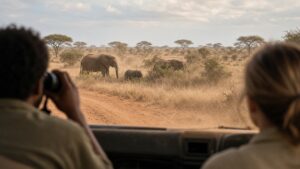
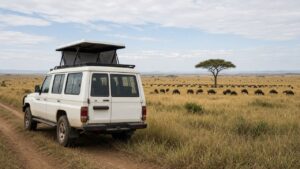
Kenya is one of the easier African safari countries for families, provided you plan the days around energy rather than around a map that tries to do everything. Children can be excellent safari companions: they notice birds, tracks and small things that adults drive past. They also wilt in a hot vehicle, get bored on a six-hour transfer, and need supper at a civilised hour. The difference between a trip they remember fondly and a trip everyone endures is almost always pace.
This guide is about how to build that pace: which parks work well, when to fly, how many nights to stay, and what to think about before you book. It is not medical advice. Questions about vaccinations, malaria and whether a particular child should travel belong with a travel clinic or your doctor, using your child’s actual history, not a generic packing list.
Choose a Route That Leaves Room to Breathe
A good family itinerary has fewer camps and more nights in each, plus at least one softer day. A classic pattern is a slow start in Nairobi, two or three nights in a park that is relatively straightforward, and a beach finish in Diani or Watamu. The seven-day safari itinerary can work if you drop a long transfer. A 14-day plan is more comfortable, because it allows a conservancy, the Mara and the coast without daily packing.
What rarely works is a new lodge every night, a same-day arrival into the Mara after an international flight, or a “quick look” at six parks. Adults sometimes tolerate that. Children usually do not, and then neither do the adults.
Shorter drives, open viewing and, at Naivasha, boats or Hell’s Gate time out of the vehicle.
Three nights is better than two with children. Fly if the road day would eat a whole afternoon of patience.
Two or three nights by the sea let everyone sleep later and swim, which is often the recovery the trip needs.
Parks and Activities That Usually Work
Nairobi National Park, the Giraffe Centre and a well-timed visit to the elephant orphanage are a gentle first contact with wildlife and do not require a long transfer. Amboseli is excellent for children because elephants are often visible in open country and the park is compact. Lake Naivasha and Hell’s Gate offer boats, cycling or walking, which breaks the pattern of sitting still. The Mara remains the big-cat highlight, but it is also a long way by road; flying with children is often worth the cost.
Conservancies can be wonderful because they sometimes allow night drives or short walks, with age rules that you must check in advance. They can also be quiet at midday, which is a gift if you need a nap. More remote parks such as Meru or a long Lake Turkana expedition are usually better left for a later trip, unless your children are older and already used to safari days.
- Use a private driver so you can stop, snack and not be tied to a group timetable.
- See Nairobi to Masai Mara before you commit to that road with young children.
- Keep short excursions as optional mornings, not as a mandatory list for every day.
Age, Game Drives and Time in the Vehicle
There is no single right age. Many lodges welcome children from about five or six on safari, some earlier, and some have minimum ages for walks, boats or balloon flights. Very young children can travel well if you keep the days short and choose camps that are genuinely set up for families, including earlier dinners and a room plan that lets someone go to bed. Teenagers often love a longer, slightly more adventurous circuit, provided they have a little independence and a decent camera or binoculars of their own.
Keep game drives shorter than you would as a couple. A three-hour morning and a late-afternoon outing, with a real midday break, beats a day that never leaves the vehicle. Let the guide know at the start that you would rather return for lunch than “just check one more loop.” A private vehicle is almost essential for this flexibility. Shared trucks run to the group, not to your child’s patience.
Health, Heat and What Not to Invent
Speak to a travel clinic about malaria, vaccinations and any certificate rules that apply to your route, including yellow fever if you are arriving from certain countries. This article will not recommend a tablet, a dose or a spray brand. It will say: start that conversation early, because some courses need time, and tell your doctor the exact parks and months you have in mind. Carry any regular medicines in your hand luggage, plus a simple first-aid kit your paediatrician is happy with.
On the ground, the practical issues are sun, dehydration, early starts and bumpy roads. Hats, water, and a fleece for dawn matter more than buying every gadget in a safari shop. If a child is prone to motion sickness, raise it before a long road transfer or a flight in a small aircraft, and follow medical advice you already trust.
What It Typically Costs
Family trips have more seats to pay for, but they also share a vehicle, which can bring the per-person transport cost down compared with two adults alone. Child rates at lodges vary widely: some camps have generous reductions, some charge close to an adult rate, and some do not accept children under a certain age at all. As a planning band, a comfortable mid-range family safari often still falls in the same daily range described in our Kenya safari cost guide, with extras for flights, a larger vehicle, and adjoining rooms or a family tent. Get a quote that lists child ages, rooming and park fees clearly, because those lines change the total more than a nicer lunch does.
Practical Tips and Common Mistakes
- Stay two or three nights in each place; avoid a daily pack-and-leave rhythm
- Fly the long safari legs if the road would take half a day
- Tell camps the children’s ages when you enquire, not after you have paid
- Pack a small bag of quiet occupations for the vehicle, plus binoculars if they will use them
- Build in a beach finish or a pool afternoon; it is not a luxury, it is recovery
- Ask about balloon, walking and boat age limits before you promise those highlights
The usual mistake is to plan an adult itinerary and then “bring the children along.” The second is to over-explain every animal, until nobody is looking out of the window. Let the guide lead, let the children have quiet, and leave room for the afternoon when everyone just swims. Those unplanned hours are often the ones they talk about later, more than a long list of formal excursions. For kit, start with the safari packing list and then subtract what you will not actually use. For paperwork, each child needs their own travel document and, in almost all cases, their own eTA.
If your children are interested in culture as well as animals, a short, well-arranged village visit can be a highlight, provided it is done respectfully and not as a surprise add-on at the end of a long, hot drive. Ask your operator what is actually offered on your route, and skip it if the day is already full.
Frequently Asked Questions
What is the best age for a Kenya safari with kids?
Many families find the trip easiest from about five or six upwards, but younger children can go if the days are short and the camp is genuinely family-friendly. Ask each lodge about its own minimum ages.
Is the Masai Mara suitable for children?
Yes, if you give it enough nights and consider flying rather than a very long road day. Keep the game drives shorter than you might as adults.
Should we add a beach at the end?
If you can, yes. Even two nights on the coast changes the mood of the whole holiday and gives everyone a chance to sleep in.
Do children need their own eTA?
Yes. Apply for each child separately and travel only when every approval is in hand.
Is a private vehicle worth it for a family?
Almost always. You control the length of drives, the snack stops and the return time, which is difficult in a shared truck.
Can we visit Ol Pejeta or Hell’s Gate with children?
Often yes, and both can be excellent, with the usual need to check age rules for night drives, walks and cycling. They are active, varied days rather than only sitting in a car.
Get Your Free Custom Family Kenya Quote Today!
Tell us the children’s ages, your dates and how you like to travel, and we will shape a safari and coast plan with sensible driving times.
Browse Multi-Day Tours Explore Short Excursions