Meru National Park sits in eastern Kenya, far enough from the Masai Mara and Amboseli that many first-time itineraries skip it. That is a mistake if you have the nights to spare. The park is the landscape of the Born Free story, with doum palms, wide rivers and a fenced rhino sanctuary, and it still feels quieter than the southern circuit. Two or three nights is enough to understand why people who know Kenya well keep coming back here.
This guide covers what you are likely to see, how to get there from Nanyuki or Nairobi, how long to stay, and how Meru pairs with Samburu or a longer northern loop. It is a planning overview, not a promise of any single sighting.
Why Meru Feels Different
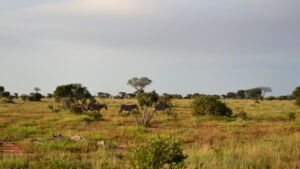
The park spreads across a mix of grassland, bush, swamp and riverine forest, with the Tana River system and smaller watercourses cutting the land. Doum palms and baobabs give the views a different silhouette from the Mara plains. Because visitor numbers are lower, you often have a track or a river loop to yourself for long stretches. That quiet is the point of coming, not a lack of animals.
Meru is also a conservation success story still in progress. A fenced rhino sanctuary protects black and white rhinos after earlier poaching emptied the park of them. Game viewing elsewhere in the reserve is about elephant, lion, buffalo, hippo, crocodile, giraffe and a strong list of less common antelope, including lesser kudu and gerenuk in the drier stretches. Leopard and cheetah are present, not guaranteed.
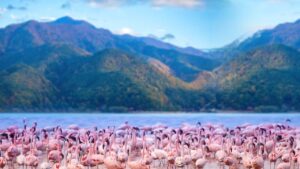
Palm-lined watercourses, open grassland and thick bush make the scenery more varied than a single classic savannah park.
A protected enclosure is the most reliable place in the park to see rhinos, on a guided visit arranged through your camp or guide.
This is the landscape associated with Elsa the lioness and the Adamsons. Come for the place, not for a theme-park retelling.
Wildlife and the Rhino Sanctuary
Plan a mix of river drives and time in more open grassland. Hippos and crocodiles are a regular feature of the waterways, and elephants often use the same corridors. In the drier bush, look for gerenuk standing on their hind legs and for lesser kudu in thicker cover. Predators follow the prey; you may have excellent lion sightings or a quiet day, just as in any wild park.
The rhino sanctuary is a separate, managed area and is usually visited with a guide who knows the current access rules. It is not a zoo, but it is more controlled than a completely free-ranging rhino drive in a place such as Ol Pejeta. If rhinos are high on your list, say so when you book so the visit is built into the day rather than treated as an afterthought. Some travellers combine Meru and Ol Pejeta on a longer northern trip precisely because the two rhino experiences feel different.
Born Free, and What That Means on the Ground
Joy and George Adamson raised and released Elsa the lioness in this part of Kenya, and the 1966 film later carried the story worldwide. You will still hear the names Elsa and Adamson attached to a kopje, a camp, a falls viewpoint and local memory. That history is real, and it is also easy to oversell. Meru is not a film set. It is a working national park with rangers, tracks that suffer in the rains, and wildlife that does not perform on cue.
If the story matters to you, ask your guide for the geographical context rather than a long performance. A quiet stop at a viewpoint, a clear explanation of how the park recovered from poaching, and time beside the river will tell you more than a checklist of film locations.
- The Meru National Park safari excursion is a starting point if you are based around Nanyuki.
- The Meru, Samburu and Shaba Safari is the natural multi-day combination.
- A Nanyuki to Meru National Park transfer keeps the road section simple.
How to Get There
From Nairobi, the road journey typically takes five to seven hours depending on the route, traffic and the gate you use. Many guests stay a night in Nanyuki or fly to Nanyuki, then continue overland, which breaks the travel. There is also an airstrip serving the park, and a flight is the comfortable choice if Meru is a middle or final stop on a fly-in safari rather than a drive from the capital.
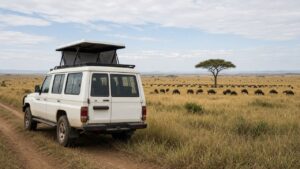
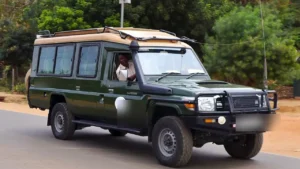
Do not treat the last stretch as a city highway. Rain can slow the access roads, and you will want a proper 4×4 and a driver who knows the gates. If you are already in the Mount Kenya region, combining Meru with Nanyuki services and then continuing to Samburu is usually smoother than doubling back to Nairobi between parks.
How Long to Stay and When to Go
Two nights is the minimum for a first visit; three nights allows a rhino-sanctuary visit, a longer river day and a less hurried departure. A single night means you will spend most of your time arriving and leaving. Meru rewards the extra morning.
The drier months, roughly June to October and January to February, are the easiest for roads and for concentrating wildlife near water. The greener months are quieter still and can be beautiful, but some tracks become difficult and you should build flexibility into the day. Mornings can be mild rather than sharply cold, though a light layer is still useful at first drive. For wider country timing, see our best time to visit Kenya guide.
What It Typically Costs
Meru is a Kenya Wildlife Service park, so non-resident entry fees apply in addition to your camp rate, vehicle and guide. As a planning band, a comfortable mid-range overnight with game drives often lands in a similar daily range to other non-Mara parks, commonly a few hundred US dollars per person per night once fees, meals and a 4×4 are included, with a wide spread for simple or luxury camps. Confirm current park fees when you book; they change, and a quote should list them clearly. For how this sits in a longer trip, see our Kenya safari cost guide.
Practical Tips
- Stay at least two nights; three if the rhino sanctuary and river drives both matter to you
- Ask in advance how the rhino sanctuary visit is arranged and whether it is included
- Carry insect protection; some wooded and riverine areas have tsetse flies
- Use a 4×4 and a guide who knows the current road conditions, especially after rain
- Pair Meru with Samburu or Shaba rather than treating it as a long one-night detour from Nairobi
- Pack as for any safari, with a slightly stronger emphasis on insect repellent and long, light sleeves
Tsetse flies are a practical nuisance in parts of the park, not a reason to stay away. Neutral or khaki clothing and avoiding very dark blue can help, and your guide will know the worse patches. If you are building a first Kenya itinerary with limited days, put the Mara first and add Meru when you have ten days or more, as in a longer loop such as the Ultimate Kenya National Parks style of trip.
Where Meru Sits in a Longer Trip
The usual combination is Meru with Samburu and Shaba, because the drive between them is reasonable and the habitats contrast well: river and palm country first, then the drier Special Five landscape. Another good pairing is a Mount Kenya or Ol Pejeta stay followed by Meru, so you are already in the highlands before the last transfer. What works less well is a single night in Meru squeezed between Nairobi and a Mara flight; you will remember the road, not the park.
If you have 14 days, Meru can replace or sit beside a second northern stop rather than replacing the Mara or a coast finish. Keep the big-cat grassland nights where they belong, and use Meru as the quieter, greener chapter. A private driver who already knows the northern roads will make those links easier than a series of one-off transfers booked at the last minute.
Frequently Asked Questions
Is Meru National Park worth visiting?
Yes, if you can give it two or three nights. It is quieter than the better-known southern parks and has a distinctive river and palm landscape, plus a rhino sanctuary.
How far is Meru from Nairobi?
The road journey is typically five to seven hours, depending on route and traffic. Many travellers break the trip via Nanyuki or fly in.
Can I see rhinos in Meru?
The fenced sanctuary is the most reliable place. Access is managed, so arrange the visit through your camp or guide rather than assuming a casual drive-in.
How does Meru compare with Samburu?
Samburu is drier, with the Special Five as the usual draw. Meru is greener, more riverine, and has the rhino sanctuary. They combine well on one trip.
How many nights should I stay?
Two is the minimum, three is better. A single night is mostly transfer time.
Is Meru good for a first safari in Kenya?
It is a strong second or third park, not the usual first stop. If you have only a week, start with the Mara or Amboseli and keep Meru for a longer itinerary.
Get Your Free Custom Meru Safari Quote Today!
Tell us your dates and whether you want to combine Meru with Samburu, Nanyuki or the Mara, and we will send a clear plan with transfers included.
Browse Multi-Day Tours Explore Short Excursions