Ol Pejeta Conservancy sits on the Laikipia plateau, in the rain shadow of Mount Kenya, and it is one of the most straightforward northern safari stops from Nairobi. It is a working conservancy rather than a national park, which matters: night drives and some off-road viewing are possible, cattle and wildlife share the landscape, and conservation programmes are part of the visitor day, not just a footnote in a brochure.
Most travellers come for rhinos and stay for the mix. Ol Pejeta holds the largest black rhino population in East Africa, it is home to northern white rhinos under intensive protection, and the Sweetwaters chimpanzee sanctuary is a separate, carefully managed visit. Two nights is the right minimum. One night is mostly transfer time.
Where Ol Pejeta Is, and How It Feels
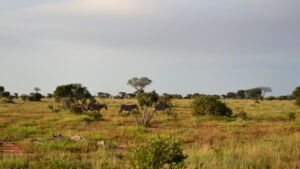
The conservancy is reached through Nanyuki, a highland town with an airstrip, shops and a clear view of Mount Kenya on a good day. From the gate, the land is open acacia and grassland, with the mountain often on the horizon. It feels different from the Masai Mara: more bush, fewer balloons and picnic crowds, and a slower evening rhythm once the night-drive vehicles go out.
Because it is a conservancy, your stay is usually tied to a lodge or camp that pays conservation fees as part of the rate. You are not simply buying a park ticket at a public gate and driving yourself in the same way as in some national parks. That structure is what funds rangers, fencing and the rhino programme, and it is also why a night here can cost more than a simple public-campsite night elsewhere.
Black rhinos are the signature sighting. White rhinos are also present, and the last northern white rhinos are kept under 24-hour care.
Sweetwaters is a rescue and care site, not a wild chimp trek. Visits are timed and guided, and they are worth building into the day.
Unlike most national parks, Ol Pejeta allows night drives, which is one of the strongest reasons to sleep on the conservancy.
Wildlife and What You Are Likely to See
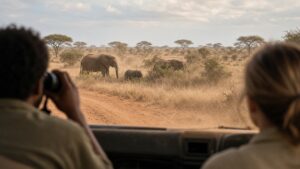
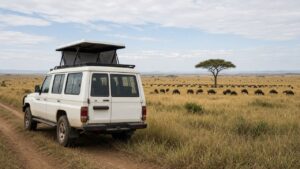
Game drives here are about rhinos, lion, elephant, buffalo, Grevy’s zebra, reticulated giraffe and a solid mix of antelope, with chimpanzee time as a booked add-on rather than a roadside surprise. Cheetah and wild dog are possible but not a promise. Birding is good, especially along the Ewaso Ng’iro river system and in wetter months. Manage expectations the same way you would anywhere in Kenya: a conservancy is not a zoo, and a quiet afternoon is still a successful day if you have already had a close rhino sighting at first light.
The northern white rhinos are not a casual drive-by in the way a grazing zebra is. Access is controlled, and the visit is usually a short, guided stop with a briefing on why the animals are guarded so closely. Go for the conservation story and the rarity, not for a long photographic session. Black rhinos, by contrast, are part of ordinary game drives, and those are the sightings that fill most mornings.
The Chimpanzee Sanctuary
Sweetwaters Chimpanzee Sanctuary cares for chimpanzees who cannot be returned to the wild. It is an educational visit with viewing platforms and a guide, not a forest trek of the kind you would do in western Tanzania. That distinction matters, because some travellers arrive expecting a long walk and leave disappointed if nobody has explained the format. The chimps are fascinating, the visit is usually an hour or so, and it combines well with a morning or afternoon drive rather than replacing one.
Book the sanctuary slot when you book the camp, especially in busy months. If you are travelling with children, ask about the recommended age and how long they will need to stay quiet at the viewing area. A Sweetwaters chimpanzee sanctuary visit can also be arranged as a structured excursion if you are staying in Nanyuki rather than inside the conservancy.
- See the Ol Pejeta Conservancy safari excursion if you are based around Nanyuki.
- The Samburu and Ol Pejeta Northern Circuit tour pairs the conservancy with a very different dry-country reserve.
- Transfers between town and the gates are covered by a Nanyuki to Ol Pejeta transfer or a Nanyuki airstrip collection.
How to Get There
By road, Nanyuki is typically a three-and-a-half to five-hour drive from Nairobi, depending on traffic and whether you leave after the morning peak. The road is a standard highland highway, not a safari track. From Nanyuki to the conservancy is then a shorter transfer. A private vehicle is the comfortable way to do this, and it lets you stop in Nanyuki for lunch or last-minute supplies. A Nanyuki airport transfer is the right product if you fly.
By air, scheduled flights from Wilson Airport to Nanyuki take under an hour. That is the better choice if you want a full afternoon game drive on arrival day, or if you are arriving from the Mara or the coast rather than from Nairobi by road. Lodge vehicles or a pre-booked driver should meet the flight; do not assume there will be a casual taxi at the airstrip that is already cleared to enter the conservancy.
How Long to Stay, and How to Use the Days
Two nights, with one full day and two shorter game-drive periods, is the standard plan. Three nights is better if you want a night drive, a chimpanzee visit, a rhino briefing and a relaxed last morning without packing in the dark. A day trip from Nairobi is possible but long, and you will miss the night drive that is one of Ol Pejeta’s real advantages.
A sensible pattern is an afternoon arrival drive, a night drive after dinner, a full morning the next day, the chimpanzee sanctuary later that morning or after lunch, and a final early drive before you leave for Samburu, Lake Nakuru or back to Nairobi. If Ol Pejeta is part of a longer country loop, it sits naturally after Nairobi and before the Rift Valley lakes and the Mara, as in our 14-day Kenya safari itinerary.
What It Typically Costs
Conservancy fees are often bundled into the lodge rate rather than paid as a separate gate ticket, though you should still ask what is included. As a planning band, a comfortable mid-range stay with game drives often falls around USD 400 to 800 per person per night in this part of Laikipia, with a wide spread below and above that for simpler or luxury camps, and with higher figures in peak months. A day excursion from Nanyuki or Nairobi will be priced differently, because it is a single-day vehicle and guide rather than a full-board night.
Budget also for the chimpanzee visit if it is not in the package, for drinks and tips, and for the road or flight transfer. Ol Pejeta is rarely the cheapest night on a Kenya itinerary, and it should not be; you are paying for access, conservation work and a style of safari you cannot copy inside most national parks. For wider trip context, see our Kenya safari cost guide.
When to Visit
Ol Pejeta is a year-round destination. The drier months, roughly June to October and January to February, make for easier driving and more open views. The greener months have fewer visitors and newborn animals, with a higher chance of rain interrupting an afternoon drive. Night drives run in all seasons when conditions are safe. If you are combining the conservancy with the Mara, the same high season that fills Mara camps will also fill the better Ol Pejeta lodges, so book early for July to October.
Mornings can be cold on the plateau, even in months that are hot by midday. Pack a fleece for dawn and the night drive, as you would for Mount Kenya country generally. Our safari packing list covers the rest.
Practical Tips
- Stay two nights if you can; a single night wastes the conservancy’s after-dark advantage
- Book the chimpanzee sanctuary in advance and treat it as a timed visit, not a flexible drop-in
- Ask your camp how night drives are run, how many guests share the vehicle, and what is included
- Do not expect the northern white rhino visit to be a long, informal photographic stop
- Carry a warm layer for dawn and for the night drive, even in warm seasons
- If you self-drive to Nanyuki, confirm whether your rental car is actually permitted on the conservancy and whether a guide is required
Photography is welcome, but drones and walking off on your own are not. Follow the guide’s instructions around rhinos, and keep voices low at the chimpanzee sanctuary. If you have limited time in Kenya and must choose between a rushed Ol Pejeta night and an extra night in the Mara, take the Mara unless rhinos or the sanctuary are a high priority. If you have 10 to 14 days, you should not have to choose.
Frequently Asked Questions
How many nights should I spend at Ol Pejeta?
Two nights is the standard recommendation, and three is better if you want a night drive and the chimpanzee sanctuary without rushing.
Is Ol Pejeta worth visiting if I am already going to the Masai Mara?
Yes, if you have the time. The habitat, the rhinos and the night drives make it a different safari, not a smaller version of the Mara.
Can I visit Ol Pejeta as a day trip from Nairobi?
It is possible, but it is a long day and you will miss the night drive. Staying overnight in or beside the conservancy is the better use of the journey.
What is the difference between Ol Pejeta and a national park?
Ol Pejeta is a private conservancy with its own rules, fees and conservation programmes. Night drives are allowed, and visitor access is usually organised through camps and guided vehicles.
Can I see the northern white rhinos?
A short, controlled visit is often possible, subject to the conservancy’s rules that day. It is a conservation briefing, not a long game-drive sighting.
How do I get from Nanyuki Airport to Ol Pejeta?
Arrange a conservancy transfer or a Nanyuki Airport transfer to Ol Pejeta in advance. The airstrip is close, but access is not a casual taxi hop.
Get Your Free Custom Ol Pejeta Safari Quote Today!
Tell us your dates and whether you want to combine Ol Pejeta with Samburu, the Mara or Nairobi, and we will send a clear plan with transfers included.
Browse Multi-Day Tours Explore Short Excursions