Fourteen days is the length at which a Kenya safari stops feeling rushed. A week is enough for Amboseli, a Rift Valley lake and the Masai Mara, as our seven-day Kenya safari itinerary shows. Two weeks let you add a northern conservancy, keep three or four nights in the Mara, and still finish on the coast without packing every morning.
This itinerary is a working plan for a first or second visit, using a private vehicle or a mix of road and short domestic flights. The shape stays the same: arrive in Nairobi, go north, swing through the lakes, give the Mara proper time, then drop south to Amboseli and the beach.
The 14-Day Route at a Glance
The route below runs Nairobi to Ol Pejeta, Lake Nakuru and Naivasha, the Masai Mara, Amboseli and Diani Beach, with a departure from Mombasa or a short flight back to Nairobi. Driving the whole loop is possible, but many guests fly one or two sectors to save long transfers.
Arrive, rest, and use a half day for Nairobi National Park or a city visit before the road or flight north.
Two nights on the Laikipia plateau for rhinos, chimpanzees and a slower conservancy rhythm.
Rhinos and Rift Valley views at Lake Nakuru, then hippos, boat time and Hell’s Gate near Naivasha.
Three or four nights for big cats, wide grassland and, in season, the migration. This is the core of the trip.
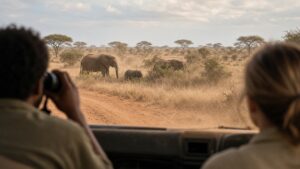
Elephants on open plains and, on a clear morning, the best views of Kilimanjaro from the Kenyan side.
A soft landing: Indian Ocean swimming, a marine excursion if you want one, and a calmer final night.
Day 1: Arrival in Nairobi
Land at Jomo Kenyatta International Airport and transfer to a hotel in Karen, Westlands or near Wilson Airport if you fly out early the next morning. After a long flight, this is a rest day. If you arrive before mid-afternoon, a short visit to the Giraffe Centre is enough.
A pre-booked Nairobi airport transfer removes the stressful part of day one. Traffic from JKIA can be slow in the evening peak, so build a buffer if you have later plans.
Day 2: Nairobi National Park or a City Morning
Nairobi is the only capital where you can see lion, rhino and giraffe with the city skyline behind them. A morning in Nairobi National Park works well if your onward transfer is after lunch. Alternatively, combine the David Sheldrick elephant orphanage visit window with the Giraffe Centre and a drive through Karen.
Leave Nairobi after lunch or the following morning, depending on whether you drive or fly to Nanyuki. The road north is a scenic half-day via the A2. A scheduled flight from Wilson Airport to Nanyuki takes under an hour and is worth it if you want a full afternoon already on the conservancy.
Days 3–4: Ol Pejeta Conservancy
Nanyuki is the gateway to Ol Pejeta, a working conservancy on the Laikipia plateau with the largest black rhino population in East Africa, northern white rhinos under careful protection, and the Sweetwaters chimpanzee sanctuary. Two nights is the right minimum. Night drives are possible here, unlike in most national parks, and Mount Kenya often sits on the horizon.
Use one morning for a standard game drive and one visit for the chimpanzee sanctuary and a rhino briefing if your camp offers it. A single night is mostly arrival and departure; the second night is when the place settles in.
- The Samburu and Ol Pejeta Northern Circuit shows how the north can stand as a safari on its own.
- The Grand Kenya Explorer is the longer private version of a country-wide loop.
- See Ultimate Kenya National Parks if you prefer a park-heavy plan without the beach.
Day 5: Lake Nakuru
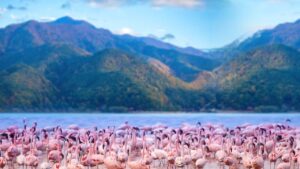
Drive from Ol Pejeta toward Lake Nakuru, usually via Nyahururu or the main highway into the Rift. The park is compact and rewards a full afternoon or an overnight. Both black and white rhinos are regularly seen, Rothschild’s giraffe move through the woodland, and the shore still draws pelicans and, when conditions are right, flamingos.
Stay just outside or inside the park. A long day trip is possible, but an overnight keeps you off the busiest midday window and makes the next transfer to Naivasha easier.
Day 6: Lake Naivasha and Hell’s Gate
Lake Naivasha is a change of pace. You can take a boat among hippos and fish eagles, walk on Crescent Island with a guide, or cycle or hike in Hell’s Gate, one of the few Kenyan parks where that is allowed. Families often rate this day as highly as a classic game drive.
Sleep at the lake and start early for the Mara. The drive to the reserve gates typically takes five to seven hours depending on the road, the Narok route and the exact camp.
Days 7–10: The Masai Mara
Three or four nights in the Mara is the heart of a two-week Kenya safari. With 14 days you can stay long enough for weather, cat activity and, between July and October, the chance of a river crossing. Crossings are never guaranteed, even in peak months, so plan for excellent general game viewing and treat a crossing as a bonus.
Split your days between early morning and late afternoon drives. If you stay in a bordering conservancy, you may also have a night drive or guided walk, subject to local rules. Book a dawn balloon flight as soon as dates are firm; our guide to a Masai Mara balloon safari explains the morning. To skip the long drive from Naivasha, fly into a Mara strip. Road options are covered in Nairobi to Masai Mara.
Days 11–12: Amboseli
From the Mara you can fly to Amboseli or drive via Nairobi, which makes for a long day. Flying is cleaner. Amboseli is famous for large elephant families on open plains and for clear-morning views of Kilimanjaro. The park is smaller than the Mara, so two nights is usually enough.
The light is best early, and haze can hide the mountain by mid-morning. Observation Hill and the wetlands are the usual highlights. With a private driver in Amboseli, you can time the morning around photography and still be back before the heat builds.
Days 13–14: Diani Beach and Departure
A short flight from Amboseli or Nairobi, or a road transfer via Tsavo and Mombasa, brings you to Diani. After ten days of early starts, this is where the trip exhales. Swim, walk the beach, or add a marine-park boat trip if you want one more activity. Two nights is a minimum; three nights makes the last morning less hurried.
Depart from Mombasa or fly back to Nairobi. A pre-arranged Diani Beach airport transfer is the calm way to close the trip. If you would rather finish in Lamu or Watamu, keep the last two nights by the ocean. Our guide to the best beaches in Kenya can help you choose.
Alternative 14-Day Shapes
This is not the only good two-week circuit. If the north appeals more than the beach, replace Diani with extra nights in Samburu or Lewa and fly out of Nairobi. If you already know the Mara, consider Tsavo West and a bush-to-beach coast escape after Amboseli. A Kenya–Tanzania combination is possible, typically Mara then the Serengeti, but you will drop either the Kenyan north or the coast. Read Kenya or Tanzania safari before splitting the time across the border.
Best Time for a 14-Day Kenya Safari
June to October is the classic dry window, with July to early October the usual period for wildebeest in the Mara. January and February are also excellent. November and March to May bring more rain, greener landscapes and fewer visitors; some camps close briefly in April or May. A two-week trip is long enough that a couple of rainy afternoons rarely ruin the journey. For month-by-month detail, see our best time to visit Kenya guide, and apply for your entry document as explained in our Kenya visa and eTA guide.
Road, Fly-In or a Mix
Driving the full loop in a private 4×4 gives flexibility and a real sense of distance, but it also means several long transfer days. The usual compromise is to drive Nairobi–Ol Pejeta–Nakuru–Naivasha, then fly to the Mara, Amboseli and the coast.
- Private 4×4 with a driver-guide for the northern and Rift Valley days
- One or two scheduled flights for the Mara, Amboseli or coast legs
- Lodge or camp vehicles for game drives once you have arrived
- Pre-booked collections at JKIA, Wilson, Mara airstrips and Mombasa or Ukunda
Where to Stay, and Typical Budget
Mid-range tented camps and small lodges are the usual sweet spot: comfortable rooms, good meals and locations close to the gates or conservancy tracks. Budget camping is possible but harder to enjoy for 14 nights in a row. Luxury camps make more sense if you fly between regions and spend the money on time rather than extra road hours.
As a planning band, a comfortable mid-range 14-day safari with parks, a conservancy and a simple beach finish often falls around USD 4,000 to 8,000 per person sharing, excluding international flights. Season, Mara park fees and flights move that number. Luxury itineraries climb quickly past it. Our Kenya safari cost guide explains what sits inside a quote.
Planning Tips and Common Mistakes
The mistakes that hurt a two-week trip are usually about pace. Cramming six parks into 14 days feels like a transfer tour. Give the Mara enough nights, do not drive there on the afternoon you land, and do not leave the coast as one tired night before a dawn departure.
- Pack as if you will do laundry once. See the Kenya safari packing list.
- Carry Kenyan shillings for small purchases and a card for larger payments; tourism quotes are usually in US dollars.
- Tell your driver and camps about early international departures at the start, not on the last morning.
- If you travel with children, keep more midday rest and fewer long drives.
- Book balloon flights and conservancy night drives as part of the plan, not as an afterthought.
Frequently Asked Questions
Is 14 days too long for a Kenya safari?
No. Two weeks is a strong length if you want more than one region and a beach finish. It feels too long only if you change camp almost every night.
How many nights should I spend in the Masai Mara?
Three or four nights is ideal on a 14-day itinerary, especially from July to October. Two nights is a minimum and works better when you are short on time.
Can I do this itinerary entirely by road?
Yes, with a private 4×4 and early starts on transfer days. Most travellers still prefer to fly at least the Mara or coast leg to protect the time in the parks.
When is the best month for this 14-day route?
June to October is the classic dry season. January and February are excellent as well, with a different mood and usually easier availability than August.
Can I replace Diani with Lamu or Watamu?
Yes. Watamu pairs easily with Malindi Airport. Lamu is a flight from Nairobi or the coast and a Swahili-island finish.
Do I need a 4×4 for the whole trip?
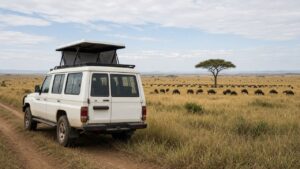
You need a safari 4×4 in the parks and conservancies. On the coast a regular car or hotel transfers are usually enough. A private driver can cover the road sections and hand you over to camp vehicles.
Get Your Free Custom 14-Day Kenya Safari Quote Today!
Tell us your dates, who is travelling and whether you prefer to drive or fly, and we will shape this itinerary with private transfers and lodges at fair local prices.
Browse Multi-Day Tours Explore Short Excursions