Kenyan etiquette is not a long list of traps for visitors. It is mostly about greeting people properly, dressing with a little modest sense in towns and on the Muslim coast, and not treating wildlife, villages or staff as a backdrop. If you get those right, you will already be travelling more politely than many people who only think about the next photograph. This guide is a practical overview for a holiday, not a handbook to every community in a diverse country.
Customs vary between Nairobi, a Maasai area, a Swahili town and a safari camp. When in doubt, watch how people around you behave, ask before you assume, and be more formal with older people than with a hotel receptionist of your own age. A good driver-guide will cue you on local expectations, especially at a community visit, a church, or a mosque quarter in Mombasa or Lamu.
Greetings, Hands and Everyday Courtesy
A greeting comes before a request. “Jambo” is widely understood for visitors, though many Kenyans greet each other with “habari” and a range of other greetings in Swahili or in local languages. “Shikamoo,” with the reply “marahaba,” is a respectful greeting to an elder. You do not need perfect pronunciation; you do need to say hello before you ask for directions, a price, or a photograph. A handshake is common, often softer than a Western business grip, and sometimes continues as a light, lingering hold while you talk. Use your right hand to greet, to offer money, and to accept a plate or a gift, as the left hand can be considered less clean in many settings.
Patience is part of politeness. A brief conversation, or at least a moment of acknowledgement, is better than a rushed demand. In offices, shops and some lodges, a little small talk is normal. Raising your voice, snapping fingers at staff, or showing anger in public rarely helps and can embarrass everyone involved. If there is a disagreement about a bill or a delay, stay calm and ask to speak to someone in charge.
Say hello, shake hands when it is offered, and only then ask your question or take out a camera.
Cover shoulders and knees in markets, mosques’ neighbourhoods and smaller towns, even if the beach is informal.
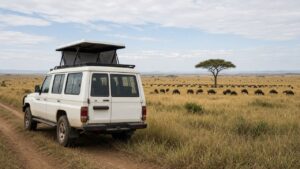
Stay in the vehicle unless a guide says otherwise, keep voices down, and never crowd an animal for a closer shot.
Dress, Religion and the Coast
Kenya is not a formal country in the way of a conservative dress-code state, and in Nairobi or at a beach resort you will see everything from suits to shorts. Even so, modest clothing is appreciated in markets, government offices, rural towns and along much of the coast, where Islam is an important part of daily life in places such as Lamu, parts of Mombasa and Malindi. For village visits and town walking, shorts and vest tops are better left for the hotel or the beach. On the sand at Diani or Watamu, ordinary beachwear is fine in resort areas; take a wrap or a shirt when you walk into the village or get into a shared vehicle.
If you enter a mosque or a religious site, follow the posted rules: covered arms and legs, and shoes off when asked. Churches are widespread; a respectful, quieter manner on a Sunday morning in a small town is simply good sense. Do not photograph inside a place of worship unless you have been told it is allowed. Public displays of affection that would pass unnoticed in a European city can be out of place in a conservative neighbourhood. Safari camps are more relaxed, but evenings in the mess tent are still not a nightclub, and a warmer layer is a courtesy to yourself as much as to the dress code.
- A slower itinerary, such as a paced multi-day Kenya tour, gives you time to greet people properly rather than rushing every stop.
- If you want a cultural visit, ask for it to be arranged through the camp or operator, not as a roadside improvisation.
- The first-time Kenya guide covers the practical side of arrival; this page is about how to behave once you are here.
Photographs, Children and Community Visits
Always ask before you photograph a person at close range, especially in a market, a village or a Maasai settlement. A smile and a gesture toward the camera are usually enough; if the answer is no, accept it without negotiation. People are not scenery. A long lens from a vehicle into someone’s homestead, or a drone over a village, is an intrusion. In some tourist-heavy spots you will be asked for money in exchange for a portrait; you can decline, agree a price, or, often better, buy a craft instead.
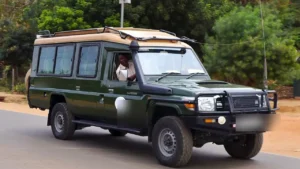
Do not throw sweets, money or pens to children from a safari vehicle or a coach window. It is not generous; it encourages a dangerous habit and undermines parents and teachers. If you want to support a school or a clinic, do it through a known programme or your operator, not by a spontaneous roadside distribution. The same applies to “gifts” at a cultural visit: pay the agreed host fee, buy something if you wish, and tip as advised, rather than creating a scramble.
A Maasai or other cultural visit can be a genuine exchange or a thin performance, depending on how it is set up. Arranged through a conservancy, a camp or a community enterprise, it is more likely to be fair. Arranged by a stranger at a reserve gate, it is more likely to be awkward. Listen, ask questions if they are welcome, and do not treat a blessing, a dance or a home as content for a loud commentary.
Wildlife, Camps and Sharing Space
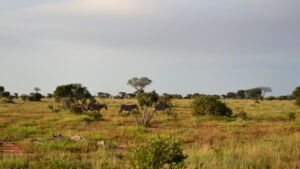
In the parks, the rules are also manners. Off-road driving where it is banned, crowding a kill, blocking another vehicle, playing music, or standing up through the roof at a sensitive moment all make the experience worse for animals and for other visitors. Follow the guide’s instructions at a sighting; they can see more than the group in the back. Walking and night drives, where they are allowed, have their own briefings — the walking safari guide is the place for those. At Hell’s Gate, stay on authorised routes, and remember that the gorge may be closed after floods.
In unfenced camps, do not walk alone at night; wait for an escort, even for a short crossing. Food stays in the dining area, not in a tent, because of monkeys and more serious visitors. Greet staff, learn a few names, and remember that the camp is their workplace as well as your holiday. A communal dinner is not the moment for a loud work call. If you have a complaint, take it privately to the manager. Tipping customs are covered separately in the tipping in Kenya guide; the etiquette point is simply to do it quietly and at the right time.
Practical Tips and Common Mistakes
- Greet people before you ask for anything, and use your right hand to give or receive
- Dress more modestly in towns, markets and on the Swahili coast than you would at a resort pool
- Ask before photographing people, and accept a refusal without fuss
- Never throw money or sweets to children from a vehicle
- Stay in the vehicle and keep your distance from wildlife unless a guide says otherwise
- Wait for a night escort in unfenced camps, even if the path looks short and obvious
The usual mistake is to behave as if only the game drive matters, and to treat everyone between the airport and the park as an obstacle. The second is to photograph first and ask afterwards. The third is to dress for the beach in a conservative town, or to walk around camp at night because it feels informal. Kenya is a welcoming country, and it responds well to a little formality at the start of a conversation. If you remember to greet, to ask, and to give animals and people the same space you would want yourself, you will already be doing enough. For first-trip logistics, pair this with the eTA guide and the notes on money in Kenya.
Frequently Asked Questions
Do I need to speak Swahili?
No. English is widely used in tourism, and a few words of Swahili — a greeting, a thank you — are appreciated rather than required.
Is it rude to wear shorts in Kenya?
Not in resorts, on safari, or in many parts of Nairobi. In markets, smaller towns and conservative coastal neighbourhoods, covering the knees and shoulders is the more respectful choice.
Can I photograph Maasai people or market traders?
Ask first, every time, at close range. If someone says no, put the camera down. Do not assume that a cultural visit is an open set for photography unless the host has said so.
Should I give money to children who ask at the roadside?
No. It is better to refuse politely. If you want to help, do it through a school, clinic or community project that your operator can name.
How should I behave at a wildlife sighting?
Stay seated unless told, keep voices low, do not press the animal, and give other vehicles a turn. Your guide’s instructions come first.
Is public affection acceptable?
A discreet manner is wise, especially outside tourist hotels and in conservative towns. What is normal on a European street can draw attention in a smaller Kenyan community.
Get Your Free Custom Kenya Travel Quote Today!
Tell us the kind of trip you want — safari, coast, or both — and we will plan a route that includes the right camps, transfers and, if you wish, a properly arranged community visit.
Browse Multi-Day Tours Explore Short Excursions